
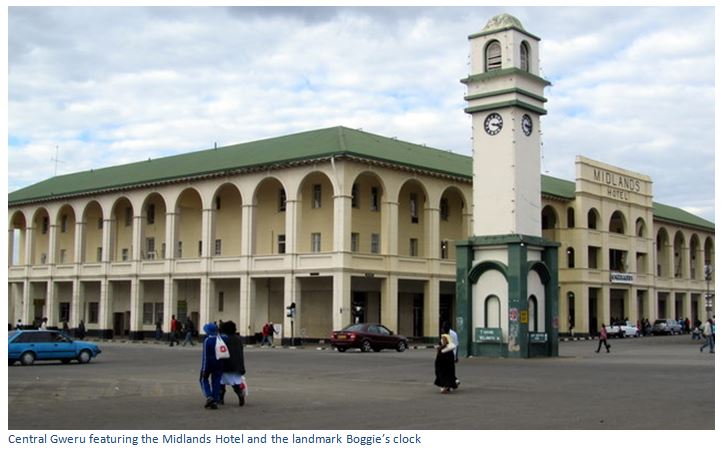
Gweru, the administrative capital of Zimbabwe's Midlands Province, has long existed in the shadow of Harare and Bulawayo. Yet beneath this quiet exterior, a technological transformation is reshaping how the city's 150,000 residents live, work, and connect. From the lecture halls of Midlands State University (MSU) to the bustling informal markets of Mkoba suburb, digital innovation is addressing challenges unique to Zimbabwe's third-largest city.
The technological landscape in Gweru differs fundamentally from larger urban centers. While Harare boasts tech startups and Bulawayo retains industrial automation, Gweru's digital evolution centers on practical applications solving immediate community problems. MSU's Innovation Hub serves as the primary catalyst, bridging academic research with local implementation. Student-developed applications address agricultural extension services, healthcare appointment systems, and public transport coordination—solutions designed for resource-constrained environments.
Mobile penetration drives much of this transformation. With smartphone ownership exceeding 65% among working-age adults, Gweru residents increasingly conduct daily activities through digital platforms. The city's taxi operators, organized through WhatsApp groups, coordinate routes and pricing more efficiently than traditional dispatch systems. Market vendors accept EcoCash and OneMoney payments, reducing cash handling risks in an economy where physical currency remains problematic.
Internet connectivity, historically a constraint, is improving through diverse channels. Liquid Telecom's fiber expansion reached central Gweru in 2022, offering reliable broadband to businesses and institutions. More significantly, Starlink's satellite service has gained traction in affluent suburbs like Lundi Park and Windsor Park, providing connectivity independent of terrestrial infrastructure challenges. This dual-speed access creates both opportunities and inequality concerns.
E-government initiatives show particular promise. The Midlands Provincial Registry Office digitized birth and death registration, reducing processing times from weeks to days. Rate payments to Gweru City Council, long plagued by revenue leakage, increasingly occur through mobile money platforms with digital receipts. These improvements, while modest compared to global standards, represent genuine service delivery enhancements for ordinary residents.
Challenges persist. Load shedding disrupts digital activities unpredictably, making backup power essential rather than optional. The digital skills gap remains significant—many residents own smartphones but utilize only basic functions. Cybersecurity awareness lags behind adoption rates, leaving users vulnerable to phishing and fraud schemes proliferating through social media.
Nevertheless, Gweru's technological trajectory suggests a city finding its niche. Rather than competing with Harare's fintech sector or Bulawayo's manufacturing automation, Gweru develops solutions for mid-sized African cities facing similar constraints. This pragmatic approach—technology serving existing community needs rather than creating new industries from scratch—may prove more sustainable than headline-grabbing but impractical innovations.
Comments
Post a Comment